

As for the security of our data, traditional encryption is insufficient, as the rise of quantum computing will render current encryption methods obsolete. Coming from the quantum computing side, the truth is that the encryption that keeps our data safe today won’t be able to keep it safe in the future. lQuantum-proof encryption is a new development, and it is necessary for anyone who wants their data to be secure not only now, but for years to come.
In this blog, we’ll delve into what quantum-resistant encryption entails, why traditional encryption is rapidly running out of time, how quantum-resistant encryption works, and who is the biggest loser if existing methods go out of date, in a short time. By the end of this journey, you’ll understand how forward-thinking encryption can shield your long-term data and what you need to look for when selecting a crypto system meant for the age of quantum computing.
Quantum Computers vs Traditional Cryptography
Traditional cryptography, previously considered secure, was built with classical computing in mind, and algorithms like RSA and ECC rest on mathematical problems that are virtually untouchable for standard computers.
Quantum computers operate differently and can knock out certain cryptographic problems with breathtaking speed, and send traditional encryption into disarray. Recognizing the problems brought to light in these quantum-based attacks, cybersecurity specialists have to work towards quantum-proof encryption as the surest option, not an experimental fad.
Quantum-proof Encryption: Built for the Long Game
In the case of encryption, traditional methods are no longer sufficient, especially as quantum computing power advances. Quantum-proof encryption is here to combat that threat.
Built for the long game, this technique gives quantum-resistant cryptography that is not based on factorization or elliptic curves. This will shield sensitive information from future quantum attacks. It’s not simply about securing files; it’s about guaranteeing that they stay safe for years to come. It is not just about day-to-day security; it’s also about future-proofing.
The Problem of Long-Life Data
Most data doesn’t rapidly lose its value. For instance:
- Legal Agreements
- Financial Records
- Medical and Personal Identity Data
- Intellectual Property
- Proprietary Research
All require security solutions that account for the long-term retention of this sensitive information. Quantum proof encryption makes sure that the confidential data remains safe in any case, considering how long the data needs to remain secure, not its current level of security.
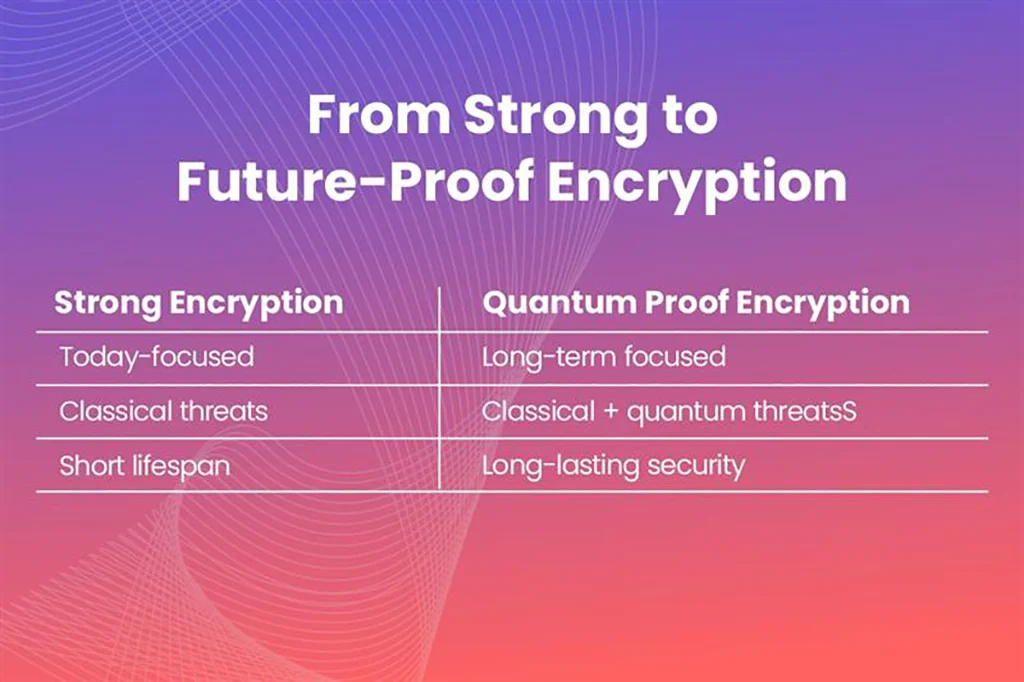
From Encryption Strength to Encryption Longevity
Regarding encryption, the goal for years has been to make it as strong as possible. Increasing key sizes, using the most advanced algorithms, and speeding up processing times. But those things aren’t everything anymore.
Well-known in the world of cybersecurity, encryption longevity is now given the same weight as encryption strength. This is what future-proof encryption is all about: it’s the capacity to endure over time, and prevent your encrypted data from being suddenly and irretrievably lost, or worse, compromised, because of a new breakthrough in technology.
It is precisely because of the mindset shift towards prioritizing encryption’s ability to endure that quantum-proof encryption is now considered such a significant part of modern cybersecurity solutions.
How Quantum-resistant Encryption Protects Against Tomorrow’s Threats
When discussing the security of data, the advent of quantum computing poses a new and potentially devastating threat. At the heart of countering this threat is quantum-resistant encryption.
The basis of this is post-quantum cryptography, or algorithms that have been constructed in the knowledge that quantum computers will, at some stage, become a reality. This kind of encryption works in a myriad of ways. It precludes the possibility of decryption by quantum algorithms, puts a check on “harvest now, decrypt later” threats, and boosts long-term secure communication.
This method of shielding against quantum attacks is an ongoing challenge, and quantum-proof systems are a key to bringing theoretical designs down to earth, enabling real-world results.
Choosing Encryption Software for the Quantum Era
Examining the encryption software of the future, you’re not just looking for immediate performance; you’re laying the groundwork for the quantum era.
When evaluating, consider a few key factors: is the software built to support quantum-resistant encryption, easy to use and integrate, does it reliably encrypt and store files, and does the vendor commit to next-generation encryption standards?
Tools built with quantum-proof encryption will assure you that your data protection strategy will not become outdated.
Wrapping It Up
Companies and individuals who are already preparing will avoid the pitfalls of expensive migrations, data exposure, and last-minute decisions when the shift to quantum-safe security becomes mandatory.
By investing in quantum-proof encryption, people are in control of their digital future. They can be proactive, rather than reactive, in the face of new threats. Staying ahead of the game in a world that promises not to be predictable.
In a world where data is essentially permanent, encryption must be crafted to be designed to endure for all time, and encryption can take that guarantee, now.